How to Clean a Birdhouse Properly Without Scaring the Birds Away

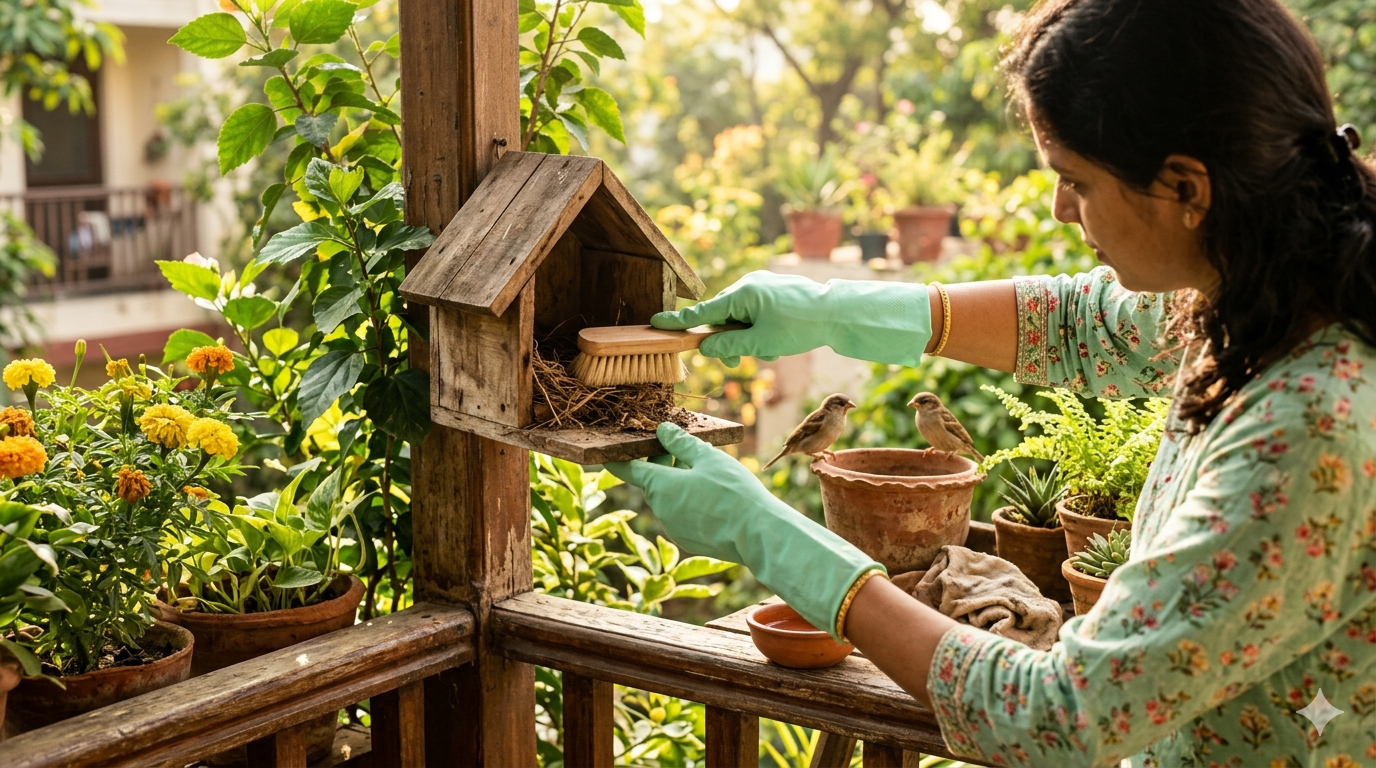
You hung the birdhouse. A sparrow family moved in. And now the season is over or maybe it is about to begin and you are wondering whether it is time to give that little wooden home a proper clean. The good news is that cleaning a birdhouse is not complicated. The tricky part is knowing when to do it, what to avoid, and how to go about it without sending your feathered guests into a panic. A dirty birdhouse is more than just an eyesore. Old nesting material carries mites, bacteria, and parasites that can seriously harm baby birds in the next nesting cycle. A timely, careful clean is one of the most important things you can do for the birds that trust your balcony or garden as their home.
Why Cleaning Your Birdhouse Actually Matters
A lot of first-time bird lovers assume that birds are perfectly fine nesting in the same old material year after year after all, they build their own nests in the wild, right? But a birdhouse is an enclosed, artificial space with limited ventilation, and that changes everything.
Old nests are a breeding ground for blowfly larvae, lice, mites, and fungal spores. When a new pair of birds moves into an uncleaned box, they are essentially moving into someone else's mess and their chicks pay the price. Studies on cavity-nesting birds show that chicks raised in cleaned nest boxes have significantly higher survival rates compared to those in boxes with old nesting material.
In India's humid monsoon climate, the problem is even worse. Moisture gets trapped inside wooden birdhouses, and if old nesting material is sitting inside, it starts to rot and grow mould. That is dangerous for the birds and for the wood itself.
"A clean birdhouse is not just a kindness to the birds it is the single most effective thing you can do to encourage them to return next season."
The Golden Rule: When to Clean (And When Absolutely Not To)
Timing is everything with birdhouse cleaning. Clean at the wrong time and you risk disturbing an active nest, causing the parents to abandon eggs or chicks. Clean at the right time and you set the stage for a successful new nesting cycle.
Safe Times to Clean
- After the breeding season ends typically October to November in most parts of India
- Before the next nesting season begins February is ideal, before sparrows start scouting for nest sites
- Anytime you are certain the nest is completely abandoned (no eggs, no chicks, and no adult birds returning for several days)
Times to Leave It Alone
- When you can see or hear adult birds regularly visiting the box
- During active nesting eggs are present or chicks are inside
- During the first two weeks after chicks have fledged parents sometimes return to roost
If you are unsure whether a nest is active, watch the box quietly from a distance for a full day. If no birds come and go, it is likely safe to proceed.
→ Read: Why Is Your Birdhouse Empty? 7 Reasons Birds Are Not Using It BirdKart Blog
What You Will Need Before You Start
You do not need any fancy equipment to clean a birdhouse properly. Most of what you need is already in your home.
- A pair of rubber or latex gloves (old nesting material can carry parasites always protect your hands)
- A small stiff brush or an old toothbrush
- A mild cleaning solution a dilute mix of white vinegar and water works well, or a very weak bleach solution (1 part bleach to 9 parts water)
- A bucket of clean water for rinsing
- A dry cloth or old newspaper to dry the inside
- A small torch or phone flashlight to inspect the interior
Avoid using strong chemical cleaners, scented sprays, or anything with artificial fragrance. Birds have highly sensitive respiratory systems and even trace amounts of chemical residue can harm them.
Step-by-Step: How to Clean a Birdhouse the Right Way
Follow these steps in order. Do not rush it the whole process takes under 30 minutes and makes a real difference.
Step 1: Confirm the Nest Is Empty
Before you touch the birdhouse, observe it from a distance. Watch for a few minutes ideally at different times of day. No birds coming and going? Gently tap on the side of the box and wait. If nothing stirs inside, you are safe to proceed.
Step 2: Open the Birdhouse
Most well-designed birdhouses have a hinged roof, a removable side panel, or a swing-open front for exactly this purpose. If yours does not open easily, use a flat screwdriver to gently pry open the access panel. Handle the box carefully sudden movements and noise can startle any birds roosting nearby.
Pro tip: Always clean your birdhouse while it is still hanging or mounted. Taking it completely down and carrying it indoors can stress nearby birds and alter the placement slightly, which birds notice.
Step 3: Remove the Old Nesting Material
Put on your gloves. Use your fingers or a small brush to remove the old nest entirely. Sparrow nests in particular tend to be dense, multi-layered structures made of dry grass, feathers, and bits of string. Bag it all in a sealed plastic bag and dispose of it in the bin do not compost it, as it may contain mites.
Shine your torch inside and check for any remaining debris, insect eggs, or signs of mould.
Step 4: Scrub the Interior
Using your stiff brush, scrub the inside walls, floor, and ceiling of the birdhouse. Pay special attention to corners, where larvae and mites tend to hide. Use your diluted vinegar solution or weak bleach mix to wipe down the surfaces.
Do not soak the wood. Apply the solution with a damp cloth or brush, scrub, and remove it. Over-wetting wooden birdhouses accelerates warping and rot.
Step 5: Rinse and Dry Thoroughly
Wipe down the interior with a clean damp cloth to remove any cleaning solution residue. Then dry the inside as thoroughly as possible with a dry cloth or paper. Leave the access panel open and let the birdhouse air dry in a shaded spot for at least two to three hours before closing it up.
This step is non-negotiable. A damp birdhouse will grow mould almost immediately, especially during India's humid months.
Step 6: Inspect for Damage
While you have the birdhouse open, take a moment to check its condition. Look for loose joints, cracks in the wood, a wobbly entry hole, or signs of rot. Small cracks can be sealed with non-toxic wood glue. If the wood is soft or crumbling, it may be time for a replacement.
→ Explore: How to Choose the Right Birdhouse Size for Sparrows BirdKart Blog
Step 7: Close Up and Let It Rest
Once the birdhouse is dry and inspected, close the access panel and give the outside a quick wipe-down. If the outer wood looks weathered, this is a good time to apply a thin coat of non-toxic, water-based wood treatment to protect it through the next season.
How to Clean Without Scaring the Birds
Even when you clean between nesting seasons, there may be birds roosting nearby on the same balcony wall, in a neighbouring tree, or in an adjacent nest box. Here is how to keep the cleaning process as low-stress as possible for them.
- Work in the early afternoon most birds are less active and less alert during the hottest part of the day
- Move slowly and avoid sudden movements near the birdhouse
- Do not bang or knock the birdhouse against surfaces while cleaning
- Keep voices low and avoid playing loud music nearby
- If a bird appears agitated or is calling repeatedly near you, stop, step back, and try again the next day
- Never clean a birdhouse in front of children who might get excited and make sudden loud noises
"Birds are sensitive creatures. A little patience during cleaning goes a long way and they will reward you by choosing the same spot again next season."
How Often Should You Clean a Birdhouse?
For most Indian households, cleaning once a year between October and February is sufficient. If your birdhouse hosts multiple broods in a single season (sparrows can raise two to three broods per year), it is worth doing a light clean between broods if the nest appears abandoned.
Here is a simple annual schedule that works well for most Indian cities:
- October to November: Full clean after the last brood of the year fledges
- January to February: Quick inspection and light clean before the new nesting season begins
- After heavy monsoon rains: Quick check for moisture or mould inside the box
If you have multiple birdhouses, do not clean them all on the same day. Spread it across a few days so the disturbance in your garden stays minimal.
→ Read: How to Protect Your Birdhouse from Crows and Cats in India BirdKart Blog
Common Birdhouse Cleaning Mistakes to Avoid
Even well-meaning bird lovers sometimes make mistakes during cleaning. Here are the ones that cause the most problems.
Using Strong Chemical Cleaners
Household disinfectants, bathroom cleaners, and strong detergents leave chemical residues that are toxic to birds. Stick to white vinegar solution or a very dilute bleach mix, and rinse well afterwards.
Cleaning During Active Nesting
This is the most serious mistake. Disturbing an active nest can cause the parents to abandon the eggs or chicks entirely. Always confirm the nest is empty before cleaning.
Leaving the Birdhouse Damp
Putting the access panel back while the inside is still wet creates the perfect environment for mould. Give it adequate time to air dry completely.
Ignoring Structural Damage
A cracked or deteriorating birdhouse is not just uninviting it can be dangerous. A weakened roof can collapse, and cracks allow predators to reach inside. Use the cleaning session to check and fix any structural issues.
Replacing the Entire Birdhouse Every Year
You do not need to replace a birdhouse annually if it is well-made and properly maintained. A good quality wooden birdhouse, cleaned and treated regularly, can last many years. Replacing it needlessly also means birds have to rediscover and re-accept the new structure.
Does Cleaning a Birdhouse Discourage Birds from Returning?
This is one of the most common questions from first-time birdhouse owners, and it is completely understandable. The short answer is no as long as you clean it between seasons and not while it is active.
Birds like sparrows are site-loyal. They remember successful nesting spots and actively return to them. What discourages birds from returning is not a clean birdhouse it is a dirty, parasite-infested, or structurally compromised one. A clean, dry, well-maintained nest box is actually more attractive to returning birds than one left uncleaned.
What you should avoid is using strong-scented products that leave an artificial smell inside the box. Birds rely heavily on scent to assess a nesting site, and an unfamiliar chemical smell can make them wary. This is why natural cleaners like vinegar are strongly preferred.
"A sparrow that nested in your birdhouse last year already knows your balcony is safe. Give it a clean, well-maintained home to return to, and it almost certainly will."
→ Read: Do Sparrows Return to the Same Birdhouse Every Year? BirdKart Blog
A Quick-Reference Cleaning Checklist
Save this and use it every cleaning season:
- Confirmed nest is empty and inactive
- Gloves on before touching old nesting material
- All old nesting material removed and sealed in a bag
- Interior scrubbed with dilute vinegar or bleach solution
- Interior rinsed with clean water
- Interior dried thoroughly no damp wood
- Structural condition checked for cracks or rot
- Exterior wiped clean
- Access panel closed and birdhouse returned to its position
- Cleaning done quietly and slowly to avoid disturbing nearby birds
Final Thoughts
Cleaning your birdhouse is one of those small, simple acts that has an outsized impact on the birds that share your home. It takes less than thirty minutes, costs almost nothing, and dramatically increases the chances of birds nesting successfully season after season.
The key is simply to do it at the right time, with the right tools, and with a little patience. Get those three things right, and your birdhouse will be a home that birds come back to, year after year.
And if your current birdhouse is difficult to open, hard to clean, or starting to show its age, it might be time to look at something better built.

Written by BirdKart
Sharing expert tips on bird homes, balcony birding, and nature-friendly living. We create practical guides, care tips, and product insights to help bird lovers choose the perfect bird homes and handcrafted water clay bowls for their outdoor spaces.