Why You Should Never Use a Plastic Birdhouse in Indian Summer

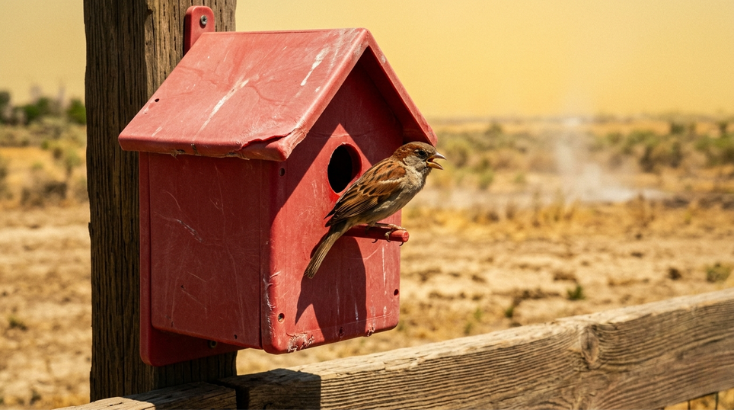
Every summer, as temperatures soar across India, thousands of birds lose their lives inside plastic birdhouses. What looks like a colourful, budget-friendly nesting box from the outside can silently turn into a death trap for the birds you are trying to protect. If you have a plastic birdhouse hanging in your garden right now, this article could save a life today.
From the scorching plains of Rajasthan to the humid coastal heat of Chennai, Indian summers push temperatures well beyond 40 degrees Celsius. Plastic, by its very nature, is one of the worst materials a birdhouse can be made from when exposed to this kind of heat. The problems it causes are not minor inconveniences. They are life-threatening for nesting birds and their chicks.
In this guide, we break down exactly why plastic birdhouses are dangerous in Indian summer conditions, what safer alternatives you should choose, and how to make your garden a genuinely bird-friendly space all year round.
Ready to Make Your Garden Bird-Safe?
Switch to a natural wooden birdhouse designed for Indian climates. Browse our handpicked range of bird-safe nesting boxes, built to protect and not harm.
Shop Bird-Safe Nesting Boxes Now →
What Makes Plastic Birdhouses So Dangerous in Indian Summer?
The core problem with plastic birdhouses comes down to one thing: heat absorption and retention. Plastic heats up rapidly when placed under direct sunlight, and unlike wood, it has almost no ability to regulate internal temperature. During peak Indian summer months (April through June), even a birdhouse placed in partial shade can reach internal temperatures of 50 degrees Celsius or more.
Birds cannot sweat. They rely on panting and the microclimate of their nesting space to stay cool. Inside a plastic birdhouse, chicks and adult birds face extreme heat stress, dehydration, and in many reported cases, fatal heatstroke.
The 6 Biggest Problems with Plastic Birdhouses in Summer Heat
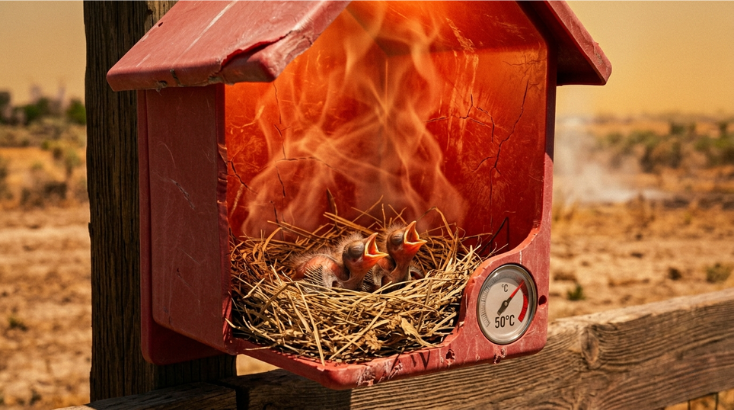
- Rapid heat build-up: Plastic traps solar radiation and raises internal temperatures to dangerous levels within minutes of sun exposure.
- Zero breathability: Unlike wood, plastic does not allow moisture or air to pass through its walls, creating a humid, stifling environment inside.
- Chemical off-gassing: Low-quality plastics release toxic fumes when heated, which can cause respiratory distress in birds, especially young chicks.
- No natural insulation: Wood provides a natural buffer against heat and cold. Plastic offers none of this, making the interior swing between extremes.
- Condensation buildup: Trapped moisture from droppings and respiration has nowhere to go, encouraging bacteria and mould growth inside the nesting cavity.
- Structural warping: Cheap plastic birdhouses warp and crack in sustained heat, creating sharp edges and gaps that expose chicks to the elements.
“The temperature inside a poorly ventilated plastic birdhouse can exceed 50°C on a hot Indian afternoon. That is not a nesting box, that is an oven.”
Bird Conservation Expert, India
How Heat Stress Affects Nesting Birds and Chicks
Birds nesting in plastic birdhouses during Indian summer face a relentless cycle of heat stress. Adult birds spend enormous energy trying to shade their chicks and regulate nest temperature, often abandoning feeding duties to do so. This leads to malnourished chicks that are weaker, slower to fledge, and far less likely to survive their first year.
For chicks that are still growing their feathers, the situation is especially critical. Without the insulation of adult plumage, young birds are entirely dependent on their environment to stay within safe temperature ranges. A plastic birdhouse provides no such protection.
Research across avian biology consistently shows that nest box temperature is one of the strongest predictors of chick survival in warm climates. In regions with Indian summer conditions, wooden nest boxes with proper ventilation maintain significantly lower and more stable interior temperatures compared to plastic alternatives.
The Hidden Risk of Toxic Plastic Off-Gassing
Most mass-produced plastic birdhouses in India are made from low-grade PVC or general-purpose polypropylene. These materials are not rated for prolonged exposure to intense heat. When temperatures rise above 40 degrees Celsius, these plastics begin to off-gas volatile organic compounds (VOCs), chemicals that are harmful to human health at high concentrations and extremely dangerous in the confined space of a birdhouse.
Chicks, with their rapidly developing respiratory systems, are particularly vulnerable. Symptoms of toxic exposure in nestlings include lethargy, gasping, swollen eyes, and sudden death, all of which can be mistaken for heat stress alone. The combination of heat and chemical exposure is doubly lethal.
This is a risk that simply does not exist with a well-made wooden birdhouse. Natural wood, especially untreated teak, sal, or pine, remains chemically inert even at elevated temperatures, making it a far safer choice for birds and for the environment.
What to Use Instead: The Best Birdhouse Materials for Indian Climate
Choosing the right birdhouse material is one of the most important decisions you can make for bird welfare in your garden. Here is how the most common materials compare for Indian summer conditions:
Why Wooden Birdhouses Are the Gold Standard in India
A well-constructed wooden birdhouse does several things that plastic simply cannot. Wood breathes and allows moisture to escape while maintaining a stable interior temperature. The natural fibrous structure of wood acts as insulation, slowing heat transfer from outside walls to the interior cavity. In an Indian summer, this difference in interior temperature can be as much as 10 to 15 degrees Celsius compared to a plastic equivalent.
Additionally, wood provides better acoustic properties, muffling outside sounds that can stress nesting birds, and offers natural grip for bird feet, which smooth plastic surfaces fail to provide for chicks learning to perch inside the box.
Key Features to Look for in a Bird-Safe Nesting Box
- Proper ventilation holes near the roofline to allow hot air to escape.
- A sloped, overhanging roof to keep rain out and reduce direct sun exposure.
- An entry hole sized to the specific species you want to attract, as too large invites predators.
- Drainage holes at the floor base to prevent waterlogging during monsoon.
- Untreated or food-safe treated wood with no chemical stains or varnish inside the cavity.
- A hinge or removable panel for easy seasonal cleaning between breeding cycles.
- A north or east-facing installation to minimise afternoon sun exposure.
“Providing a safe nesting box is not just an act of kindness. It is a commitment to giving a wild creature its best possible chance at life.”
Indian Wildlife Naturalist
How to Make Any Birdhouse Safer During Indian Summer
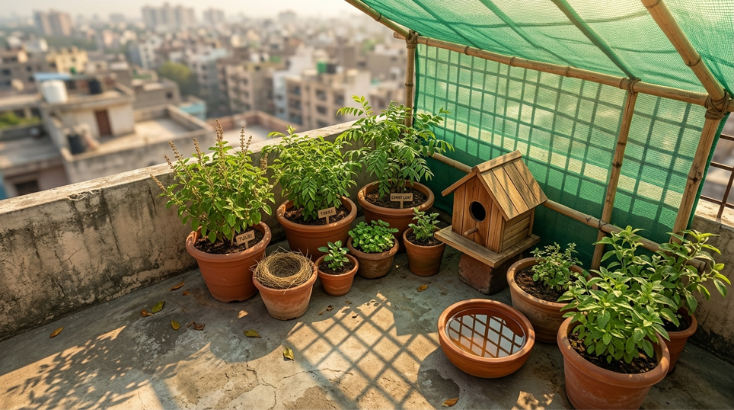
If replacing your plastic birdhouse immediately is not possible, here are some steps to reduce the risk for birds in the short term:
- Move the birdhouse to a shaded location, ideally under a broad-leafed tree or on a north-facing wall.
- Wrap the outside with jute cloth or light-coloured fabric to reduce heat absorption.
- Drill additional ventilation holes near the roof (at least 4 to 6 mm in diameter, away from the entrance hole).
- Check the internal temperature using a probe thermometer before allowing birds to nest. If it exceeds 40 degrees Celsius in shade, it is not safe.
- Plan to replace it with a wooden birdhouse before the next breeding season.
Indian Birds That Benefit Most from Proper Nesting Boxes
Many common Indian garden birds are cavity-nesting species that actively look for safe birdhouses. Providing the right nesting box can make a genuine difference to local bird populations. Species that commonly use birdhouses in Indian gardens include:
- Common Myna and Jungle Myna, prefer larger cavity openings of 60 to 70 mm.
- House Sparrow, thrives in smaller wooden boxes with 32 mm entry holes.
- Rose-ringed Parakeet, requires larger nest boxes with 65 mm openings.
- Common Starling, adapts well to wooden nest boxes with moderate entry sizes.
- Small Owls including the Spotted Owlet, benefits from larger, deep wooden boxes placed high on trees.
Each of these species is sensitive to nest cavity temperature during the breeding season. A plastic birdhouse that reaches dangerous temperatures can cause complete nest failure and drive these birds away from your garden permanently.
Final Thoughts: Make the Switch Before the Next Summer
A plastic birdhouse might cost less upfront, but the price is paid by the birds that trust it with their lives. Indian summers are unforgiving, and nesting birds need every advantage they can get. The solution is not complicated. A well-built wooden birdhouse, placed correctly, cleaned regularly, and suited to the species in your garden, will outperform any plastic alternative in every measurable way.
You do not need to be an ornithologist or a wildlife expert to make a positive difference for birds in India. You just need to make one good decision: choose the right birdhouse. Your garden birds will thank you for generations.

Written by BirdKart
Sharing expert tips on bird homes, balcony birding, and nature-friendly living. We create practical guides, care tips, and product insights to help bird lovers choose the perfect bird homes and handcrafted water clay bowls for their outdoor spaces.