How to Set Up a Bird Feeding Station on a Small Apartment Balcony

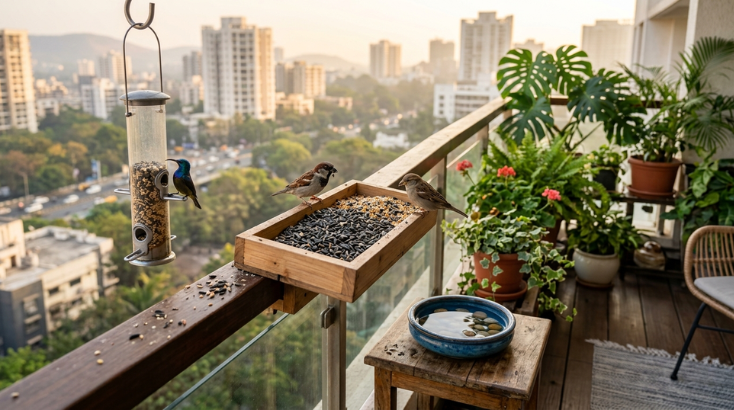
Living in an apartment does not mean you have to miss out on the joy of watching birds up close. With a little planning and the right setup, even the smallest balcony can become a lively bird feeding station that attracts sparrows, sunbirds, bulbuls, and more right to your doorstep.
This guide walks you through everything you need to know about setting up a bird feeding station on a small apartment balcony. From choosing the right feeders to picking the best bird seeds and keeping things clean and safe, we have got you covered whether you are a complete beginner or someone who has tried bird feeding before.
1. Why Apartment Balcony Bird Feeding Is Worth It
You do not need a garden or a large outdoor space to enjoy bird watching. A balcony bird feeder setup, even on a fourth-floor apartment, can successfully attract birds if done correctly. Here is why more and more city dwellers are making the switch to balcony bird feeding:
• It reduces stress and improves mental well-being studies show that observing birds has a calming effect.
• It supports urban biodiversity and helps birds find food in increasingly concrete-heavy cities.
• It is low maintenance once the initial setup is done.
• It is a wonderful activity for children and seniors alike.
• Small balcony bird feeding is cost-effective and does not need any special equipment.
2. Choosing the Right Bird Feeder for Your Apartment Balcony
The type of bird feeder you choose will determine which birds visit you and how easy the feeding station is to manage. For small apartment balconies, space-saving and mess-reducing options work best.
Railing-Mount Feeders
These clip or attach directly onto your balcony railing and do not take up any floor space. They are ideal for small spaces and can be removed quickly when not in use. Great for beginners starting their balcony bird feeder setup.
Window Bird Feeders
These attach to glass surfaces using suction cups and let you observe birds from inside your home. They are excellent for apartment bird watching because they keep the feeding activity right in front of you.
Hanging Tube Feeders
These can be hung from a balcony hook or a simple rod and are suitable for dispensing seeds like sunflower hearts and millet. They keep seeds dry and are a popular choice for small balcony bird feeding.
Platform or Tray Feeders
A small flat tray placed on a railing or hung from a hook gives birds open access to food. These attract a wider variety of birds but may require more frequent cleaning.
Suet Feeders
Suet cages filled with suet blocks or fat balls attract insect-eating birds like woodpeckers and nuthatches. They are compact, easy to hang, and excellent for balcony use.
Not sure which feeder suits your space? Read our detailed guide on the best bird feeders for every need to find the perfect match for your balcony.
3. Best Bird Seeds and Food for a Balcony Feeding Station
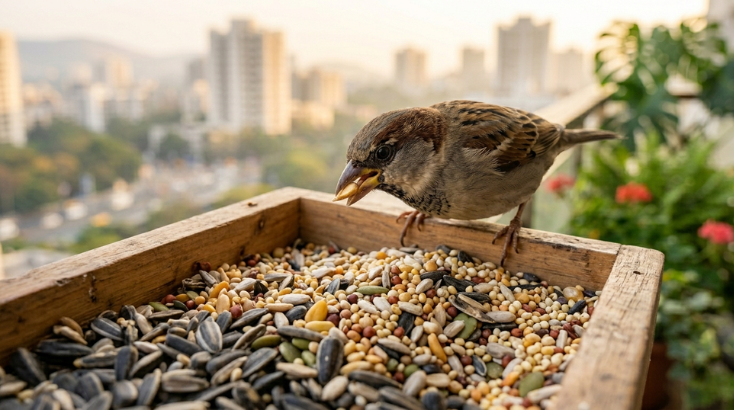
What you put in your feeder matters just as much as the feeder itself. Choosing the right bird seed types will determine which birds come to visit and how often they return.
• Sunflower Seeds (hulled) one of the most universally loved seeds, attracting a wide range of birds including finches, sparrows, and nuthatches. Hulled versions create less mess on your balcony.
• White Millet a top choice for ground-feeding birds and small sparrows. Lightweight and affordable.
• Peanut Granules high in protein and fat, great for attracting crows, mynas, and parakeets. Use unsalted varieties only.
• Nectar Solution a homemade or store-bought sugar-water mix for hummingbird feeders and sunbirds.
• Suet Cakes high-energy food perfect for cooler months, loved by insect-eating birds.
• No-Mess Seed Mixes specially formulated blends with hulled seeds that produce minimal shells and debris, ideal for apartment use.
Pro Tip: Avoid bread, salted food, honey, or processed snacks. These can harm birds even if they appear to enjoy them.
Learn more about what birds eat and what to avoid in our complete bird seeds and feeding guide for Indian birds.
4. Step-by-Step: Setting Up Your Balcony Bird Feeding Station
Follow this simple setup process to get your apartment bird feeding station up and running in under an hour.
Step 1 Choose Your Spot
Pick a corner of your balcony that gets partial shade during the afternoon. Direct afternoon sun can spoil seeds quickly. Make sure the feeder location is visible from inside your home so you can enjoy watching birds without disturbing them.
Step 2 Install Your Feeder Safely
Use railing mounts, suction cups, or over-the-rail hooks depending on your feeder type. Make sure everything is secured tightly so feeders do not swing or fall in strong winds. Avoid drilling into walls if you are renting clamp-style mounts are a renter-friendly option.
Step 3 Add a Bird Bath (Optional but Recommended)
Birds need fresh water for drinking and bathing. A shallow dish or small hanging bird bath placed near your feeder station will significantly increase bird visits, especially during summer. Change the water every day to keep it clean and prevent mosquito breeding.
Step 4 Fill the Feeders and Wait
Fill each feeder with the appropriate food and give the birds a few days to discover it. Be patient it can take 3 to 7 days for birds to find a new feeder, especially in urban areas. Once they do, they will return regularly.
Step 5 Create a Consistent Routine
Refill feeders at the same time each day if possible. Birds are creatures of habit and will begin timing their visits around your schedule. Morning fills tend to work best as many birds feed heavily at dawn.
5. Birds You Can Attract to an Apartment Balcony in India
Depending on your city and floor, here are some common birds that can be drawn to a balcony bird feeding station across Indian urban areas:
• House Sparrow loves millet and small seeds; highly adaptable to urban environments.
• Common Myna enjoys grains, fruits, and leftover food; bold and curious visitors.
• Rose-ringed Parakeet attracted to sunflower seeds and peanuts; bright green and unmistakable.
• Purple Sunbird visits nectar feeders; the male has an iridescent purple plumage.
• Red-vented Bulbul enjoys fruits and soft foods; one of the most common balcony visitors.
• Spotted Dove a ground feeder that appreciates platform trays with millet or grain.
Want to know more about the birds that visit Indian cities? Check our blog on how to attract native birds to your home for region-specific tips.
6. Keeping Your Balcony Bird Feeding Station Clean
Hygiene is one of the most overlooked aspects of bird feeding and one of the most important. A dirty feeder can spread disease among birds and make a mess of your balcony.
• Clean feeders at least once a week with hot water and a mild, bird-safe detergent.
• Remove uneaten wet food within 24 hours, especially during monsoon season.
• Place a tray or mat under the feeder to catch seed shells and reduce balcony mess.
• Use no-mess bird seed blends to minimise hulls and debris.
• Rinse bird baths daily and scrub them once a week to prevent algae build-up.
• Check for mould in tube feeders regularly, especially during humid months.
7. Apartment Bird Watching: Tips to Enhance the Experience
Once your balcony bird feeding station is active, here is how to make the most of apartment bird watching:
• Keep a pair of compact binoculars nearby to observe birds closely without stepping onto the balcony.
• Download a bird identification app like eBird or Merlin Bird ID to log and identify your visitors.
• Keep a bird journal to note which species visit and at what time patterns are fascinating.
• Add a few native plants to your balcony to create natural shelter and make the space more inviting.
• Avoid sudden loud noises or movements near the balcony while birds are feeding.
8. Common Mistakes to Avoid
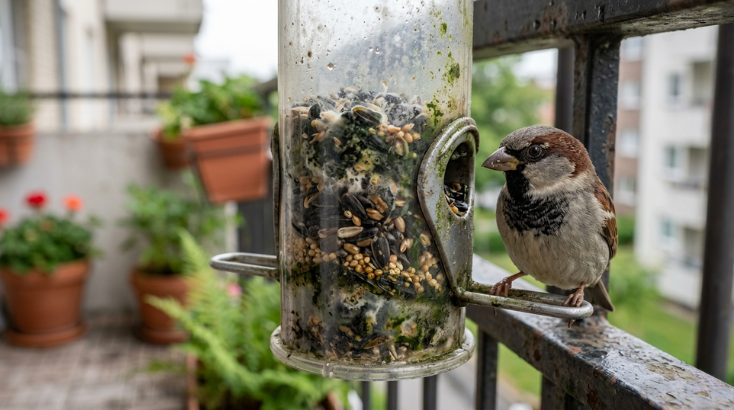
Many beginners unknowingly make mistakes that keep birds away or cause harm. Here are the most common ones to steer clear of:
• Overfeeding always remove stale or uneaten food. Too much food left out attracts rats and pests.
• Using low-quality seeds cheap mixed seeds often contain fillers that birds ignore. Stick to quality blends.
• Placing feeders too close to glass birds may fly into the window. Use window stickers to prevent collisions.
• Inconsistent feeding if you start feeding, try to keep it regular so birds do not depend on a source that disappears.
• Ignoring predator safety keep feeders away from spots where cats can easily access them.
9. Must-Have Accessories for Your Balcony Bird Feeding Station
Here is a quick checklist of everything you need to get started:
• 1 to 2 bird feeders (railing mount or hanging style)
• No-mess seed mix or sunflower hearts
• Shallow bird bath or water dish
• Balcony hook or railing clamp
• Catch tray for seed debris
• Mild feeder cleaning brush
• Bird ID app on your phone
Browse our curated range of bird feeders, bird baths, and accessories for apartments everything you need to get started in one place.
Final Thoughts
Setting up a bird feeding station on a small apartment balcony is one of the simplest and most rewarding things you can do as a city dweller. It brings nature closer to home, creates a calming daily ritual, and gives urban birds a much-needed food source in an environment where natural feeding grounds are shrinking.
Start small, one feeder, one seed type, and a little patience. Within a week, your balcony could be buzzing with activity. Once you see your first regular visitor perch on the railing and come back day after day, you will understand why so many people consider bird feeding one of life's quiet pleasures.
Happy bird feeding. The birds are already on their way.

Written by BirdKart
Sharing expert tips on bird homes, balcony birding, and nature-friendly living. We create practical guides, care tips, and product insights to help bird lovers choose the perfect bird homes and handcrafted water clay bowls for their outdoor spaces.